Množství:
Celkem:


06 July 2026
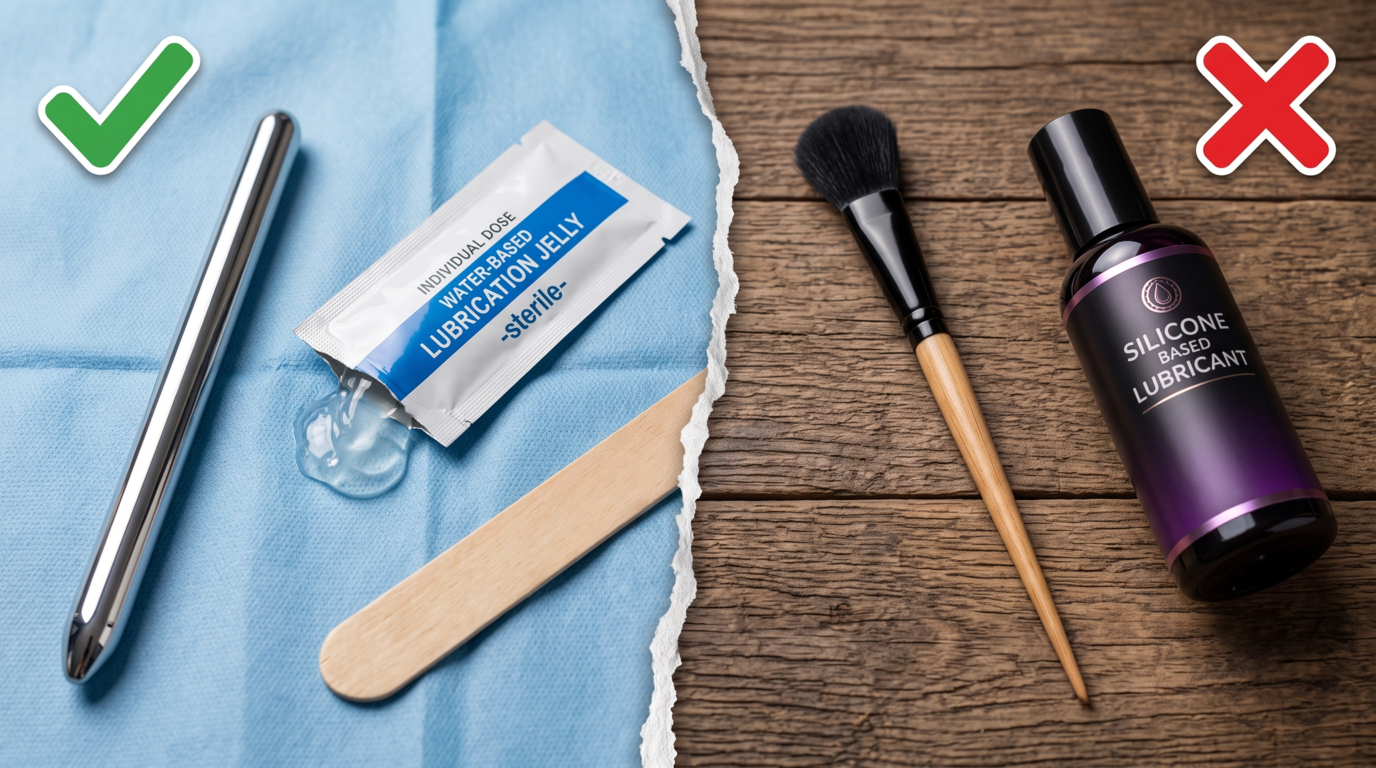
We already outlined a basic rule in the previous article, but it is so important that it deserves repeating. The ground rule is absolutely no household items; only urethral sounds (dilators) are designed and suitable for the purpose of urethral insertion.
However, there are a few more guidelines to stick to. Which lubricants to use and which to avoid? How can you tell what’s acceptable and what needs medical attention? How can you minimize the risk of a urinary tract infection? These are some of the topics we will cover today.
Proper lubrication is very important for a good and safe sounding experience. In the case of male anatomy, you can take advantage of pre-ejaculatory fluid. It is natural, and because it originates from your own body, you aren't introducing any foreign contamination. As it flows from the inside, you can be sure the whole length of your urethra is already lubricated when it starts flowing out. However, the amount produced varies greatly between individuals and can be unpredictable, so most people will still find themselves needing to augment this natural lubrication.
Always use a sterile, water-based lubricant packaged in individually sealed, single-use sachets. Larger containers are no longer sterile after they have been opened. Some of the sterile lubricants also contain disinfecting agents and numbing agents. A common disinfecting agent is chlorhexidine, which might cause irritation in some people, but unless you have this problem, it can be considered as an advantage in general. Unfortunately, chlorhexidine-containing lubricants are often combined with a numbing agent, usually lidocaine. We do not recommend numbing lubricants, as they can reduce your awareness of potentially injurious manipulation by raising your pain threshold.
The choice of a good lubricant is highly individual. Some lubricants may cause tingling or a mild burning sensation, which is unpleasant and might ruin your first impressions of sounding. Be patient and sample a few different lubricants. In many cases, this is simply a sign that a different lubricant would suit you better.
Silicone-based lubricants are absolutely unsuitable for use in urethral play. The oily layer formed by them traps bacteria inside the urethra and is very difficult to flush out. This highly increases your chances of getting a urinary tract infection (UTI).
Make sure all tools are properly cleaned and sterilized. Disinfect your hands and the area around the urethral opening as well. We will cover this topic in depth in an upcoming article.
Flushing any contaminants out of your urethra is essential for lowering the risks of UTI development. You should drink enough water throughout the day to have pale yellow urine at most before you start your session.
It is also advisable to use a supplement with D-Mannose starting a day before your session and continuing for a few days afterward. D-Mannose helps to remove bacteria by binding to them and preventing them from anchoring to the urinary walls, which makes them easier to flush out through urination.
You might experience a mild stinging sensation while urinating after your sounding session. This is quite usual, and as long as this only lasts up to one day and doesn't worsen, you should be ok. However, if the discomfort grows stronger between urinations, or if you notice pink or red coloration in your urine, you develop a fever, or you find yourself unable to urinate at all, seek medical assistance immediately!
Urethral play is a marathon, not a sprint. It is not something you can pull out at the last minute without preparation. Your urethra is surprisingly flexible and can stretch greatly, but it needs time to do that. Reaching the largest diameter you can accommodate can easily take up to 30 minutes of working up. Don’t expect everything to be relaxed and stretched out immediately.
When inserting your toy, there should be minimal pressure. Some toys are heavy enough to enter the urethra on their own, but most of them will need a bit of help.
How much help? Think about the force it takes to push a glass of water across a table with a finger. That level of pressure should generally be sufficient. If you need to hold your sound with more than two fingertips to deliver the pressure needed, you’re definitely using excessive force and risk significant irritation or worse injury.
Move the toy slowly and keep it aligned with the natural path of the urethra. Avoid any abrupt movements and never create sideways pressure on the urethral wall.
It is also a good idea to remove the toy and relubricate often. Especially if you’re using a light lubricant together with a snug-fitting sound, the natural tendency is to wipe the lubricant off the sound. You'll need to compensate by reapplying lubricant frequently.
Never insert the entire length of a sound into the urethra. Always leave enough of the sound exposed to maintain a secure grip.
Compared to anal insertion, where it is the anal sphincters that create the force on the toy and can pull objects in easily, the urethra creates more even, less localized force on the toys. As long as some part is still on the outside, there will be a tendency to actually expel the toy.
On the other hand, if the toy is very short and gets pushed deep, this force might reach an equilibrium and the toy might stay in place and become difficult to retrieve.
Never insert unconnected small objects like individual beads. If you have anything stuck in your urethra, seek medical assistance without delay.
